
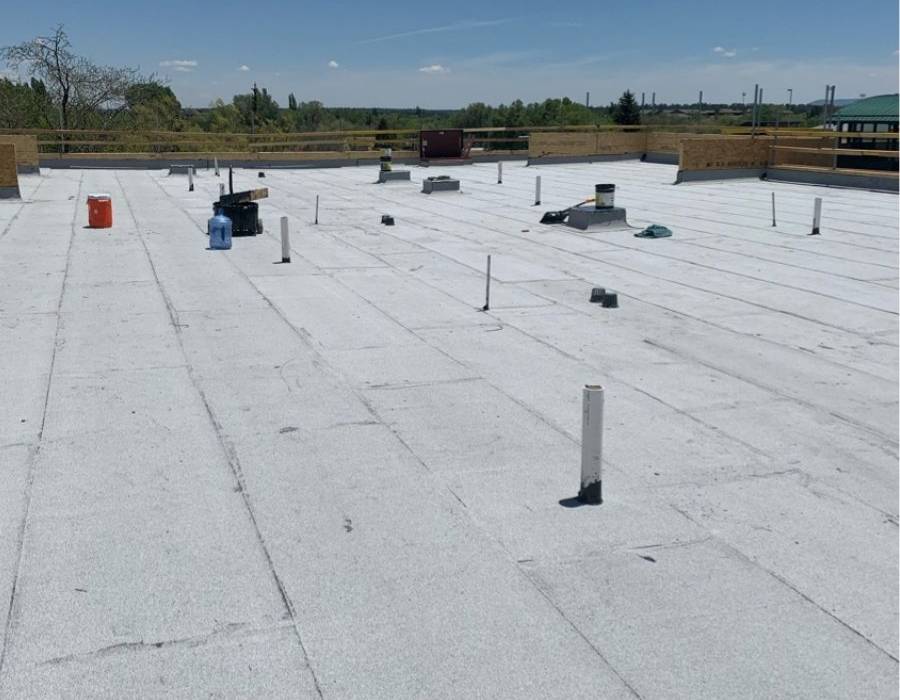
Modified Bitumen Roofing: When to Choose It and How to Maintain It
In Maryland’s unique climate, where humid summers, significant rainfall, seasonal snow, and temperature swings are all part of the year—commercial and multifamily flat roofs face a formidable set of challenges. That makes material choice and installation quality more important than ever. Modified bitumen roofing rises to those challenges, blending the time-tested waterproofing of asphalt with modern polymer enhancements for greater flexibility and performance.
Whether you’re managing a warehouse in Baltimore County, an apartment complex near the Chesapeake Bay, or a retail center in the D.C. suburbs, this guide will help you understand when modified bitumen is the right choice and how to maintain it to meet Maryland’s demands.
What Is Modified Bitumen Roofing?
Modified bitumen roofing is a high-performance membrane system engineered for flat and low-slope roofs. It merges the proven waterproofing strength of traditional asphalt with advanced polymer technology—typically APP (Atactic Polypropylene) for UV resistance and rigidity, or SBS (Styrene-Butadiene-Styrene) for elasticity and flexibility.
Installed in multi-ply layers, modern modified bitumen membranes often exceed 240 mils in thickness, creating a robust barrier against weather, impact, and wear. For bonds between rolls, systems use torch-applied heat, hot asphalt, cold adhesives, or self-adhering peel-and-stick methods to create seamless waterproofing/
This roofing system delivers enhanced durability, excellent weather performance, and easy repairability. Thanks to its flexibility and watertight layers, it’s ideal for commercial or residential settings in climates experiencing temperature swings and UV exposure.
When to Choose Modified Bitumen Roofing
1. Ideal for Flat & Low-Slope Roofs
Modified bitumen was specifically designed for flat and low-slope commercial roofing applications. Its multi-layer construction creates a seamless, watertight membrane that significantly reduces the risk of leaks and ponding water—common challenges in low-pitch roof designs. This makes it an ideal solution for properties such as warehouses, schools, and retail centers that need reliable waterproofing in horizontal or near-horizontal roof configurations.
2. Built for Harsh & Variable Climates
Thanks to its polymer-enhanced formulation, modified bitumen offers excellent resilience in extreme weather. SBS-modified bitumen provides rubber-like flexibility, allowing the membrane to expand and contract without cracking, while APP-modified versions offer thermoplastic strength and enhanced UV resistance. This adaptability makes modified bitumen a strong performer in regions that experience frequent temperature swings, scorching summers, or harsh winters.
3. Proven Durability & Longevity
With its multi-ply composition typically 2 to 3 layers—modified bitumen offers added thickness and strength, often exceeding 240 MILS. This robust build outperforms many single-ply membranes when it comes to puncture resistance and impact tolerance. When properly installed and maintained, modified bitumen roofing can last anywhere from 15 to 30 years, rivaling the lifespan of traditional built-up systems while providing greater flexibility and repairability.
4. Quick & Cost‑Effective Repairs
One of the key advantages of modified bitumen is its ease of repair. Issues such as cracks, seam separations, or surface blisters can typically be patched or sealed locally without needing to replace entire sections. This reduces downtime, avoids business disruption, and makes long-term maintenance more budget-friendly—especially for facilities that can’t afford extended roofing projects.
5. Compatibility & Versatility
Modified bitumen is known for its adaptability across various installation methods, including torch-applied, cold-adhesive, mop-down, and peel-and-stick systems. Its compatibility with built-up roofing techniques allows for easy integration with existing structures. Plus, it accommodates the addition of insulation layers and reflective coatings, making it a versatile solution for diverse commercial roofing needs.
How to Maintain Modified Bitumen Roofing
1. Biannual Inspections (Spring & Fall)
Inspect for pooled water, debris, blisters, and loose seams, especially around flashings. Most leaks occur at seams, so these checks are vital.
2. Clean Debris & Ensure Drainage
Clear leaves and debris monthly and make sure drains, scuppers, and gutters stay free-flowing. Ponding beyond 48 hours accelerates material wear.
3. Address Damage Promptly
Seal cracks, reopen and reseal failing seams, and remove blisters using recommended bitumen mastic or sealant. This prevents small issues from escalating.
4. Apply Reflective Coating Every 5–7 Years
A reflective overlay not only shields against UV damage but also delivers substantial energy savings—up to 35 °C surface temperature reduction on some roofs.
5. Limit Roof Traffic & Add Walk Paths
Foot traffic wears down membranes. Install walk pads near HVAC equipment or work zones, and restrict use when possible.
6. Yearly Professional Checks
Hire certified roofers for moisture scans, thermal imaging, and detailed seam/flashing inspections to catch hidden issues early.
7. Drainage & Load Capacity Audits
Ensure drainage systems function properly and that the roof deck can handle temporary loads (e.g. ponded water, snow weight).
Why Modified Bitumen Roofing Is a Smart Investment

When you invest in a roof for a commercial property in Maryland, you’re not just investing in protection, you’re investing in operational continuity, occupant comfort and long-term asset value. Modified bitumen offers that structural reliability and flexibility.
Because it’s designed to handle foot traffic, rooftop equipment, ponding and changing temperatures, it reduces risk of leaks, reduces interruption during repairs and gives you a roofing system suited for the region’s demands. With proper installation and care—and the right materials and contractor, you’re setting your property up for decades of dependable performance.
A Roof That Works – For Today and Tomorrow
In a state like Maryland, where weather is unpredictable and building demands are varied, selecting a roof system that delivers on durability, flexibility and longevity is vital. Modified bitumen roofing delivers that balanced performance and when matched with a skilled contractor like Turner Roofing Company, you’re not simply installing a roof, you’re securing peace of mind. For any flat or low-slope commercial building in Maryland, this roofing system is a strong contender worth serious consideration.